 Easy read and translate



Your pelvic floor in pregnancy and postnatal
The role of the pelvic floor
The pelvic floor muscles form a bowl underneath your pelvis to provide support and control for your bladder and bowel. The muscles attach to your pubic bone at the front, then span backwards to your coccyx (tailbone) and outwards towards your sitting bones. The opening of your bladder, vagina and your bowel all pass through the pelvic floor.
The pelvic floor supports the pelvic organs and abdominal contents especially when standing or when there is an increase in pressure in your abdomen with activities such as lifting, bending or straining. The muscles also contribute to sexual satisfaction and sensation.
The muscles help to keep the bladder and bowel openings closed to prevent unwanted leakage. The muscles need to work gently most of the time and also be able to work harder when your intra-abdominal pressure increases i.e. when you cough, sneeze, lift or exert yourself. They also help to control wind and to hold on to your bowels.
Tour of the pelvic floor
Watch the video for information about your pelvic floor.
Did you know...?
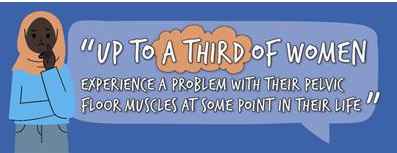
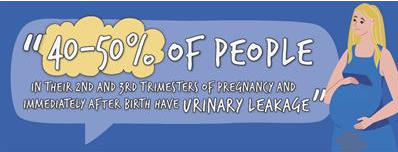
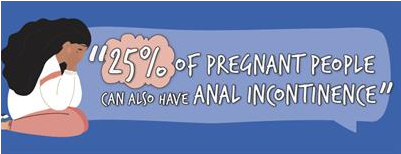
Although common, it's important to know that these symptoms should only happen for a short time, be mild and should improve quickly.
Does your pelvic floor need attention?
The following are signs that your pelvic floor needs attention:
- Urinary leaking with activities such as coughing, laughing, sneezing, lifting and jumping.
- A sudden need to rush to the toilet for a wee or leaking urine on the way to the toilet.
- A need to go to the toilet for a wee more frequently during the day or night.
- Leakage of poo or difficulty controlling wind.
- A sudden need to rush to the toilet for a poo or difficulty cleaning after a poo.
- A feeling of heaviness, dragging or something ‘coming down’ inside your vagina.
- A reduced or lack of sensation during intercourse.
- Discomfort during sexual intercourse.
Watch a video about bladder and vaginal problems during and after pregnancy
Tears and assisted birth
Your perineum is the area between your vaginal opening and back passage (anus). It is common for the perineum to tear to some extent during childbirth. Tears can also occur inside the vagina or other parts of the vulva, including the labia.
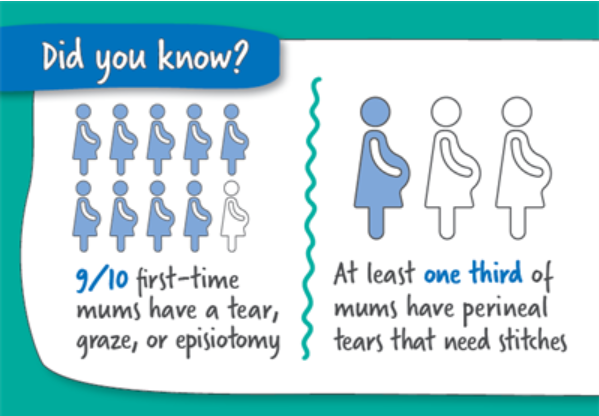
Ninety per cent of women giving birth vaginally will get a perineal tear (this number includes all types of tear). This most often occurs to the tissue and skin at the vaginal opening and sometimes affects the pelvic floor muscle as well. Sometimes an episiotomy may be required to assist during the delivery of your baby, and when instruments such as ventouse (suction cap) or forceps are used. A few women have a tear to the muscles of the back passage as well, and this is called a third or fourth degree tear.
How can perineal massage help?
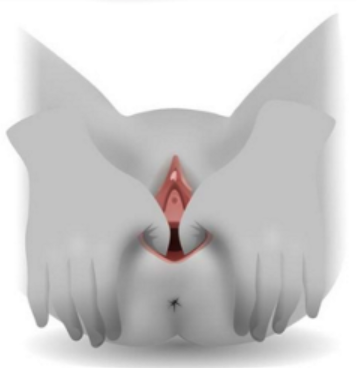
From 35 weeks onwards, you may choose to try perineal massage until your baby is born, which has been shown to reduce the risk of tears. This is particularly beneficial for first-time mothers. You may wish to ask your partner to help with this.
How to do it:
- Sit in a warm bath before you start. This may help loosen the muscles around your perineum.
- Find a comfy position. The best place is in bed. Prop yourself up with pillows to support your
back and bend your knees. - Use a lubricant like vitamin E oil, almond oil or olive oil.
- Hold your thumbs in the position shown for about 1 minute (see diagram below). Press down towards the anus and to the sides of the vagina walls. Hold your thumbs in this position for about 1 minute. You will begin to feel a stretching sensation. Breathe deeply.
- Gently massage the lower half of your vagina using a U shaped movement for 2 to 3 minutes. Repeat this 2 to 3 times.
- Repeat daily or when possible. It may take a couple of weeks of daily massage before you notice more elasticity in your perineal area.
For more information on other ways to reduce the risk of tearing in childbirth, please ask your midwife. After the birth of your baby a healthcare professional will offer you an examination to see if you have a tear. They will advise you if you need stitches. Most tears heal within 6 weeks with no long-term problems.
For women who do have problems after a tear (such as pain, difficulty going to the toilet, incontinence or mental health problems) specialist help is available.
Need more help?
Consider self referring using the link below:
If you have a new injury or problem, please look at the self help information in our advice pages. We will often complete the same exercises and share information in clinic appointments.
If you still need some more help you can self refer into our service. Please note that the NHS is currently experiencing longer than normal waits, for more information visit our waiting times page.
