Male pelvic pain
About male pelvic pain conditions
Male pelvic pain can be caused by various conditions such as prostatitis (inflammation of the prostate), urinary tract infections, or chronic pelvic pain syndrome. Symptoms can include pain which varies in intensity and type. The pain may be localised to the lower abdomen, hips, buttocks, back passage, perineum, scrotum or penis.
Urinary symptoms may include urgency and frequency, changes to urinary flow, hesitation to start the flow of urine, pain on urination and urinary incontinence. Patients may have trouble with bowel function, including pain on bowel opening, constipation or difficulty emptying the bowel.
Symptoms can also impact sexual function and may include erectile dysfunction and pain associated with erections or ejaculation.
What causes the pain?
There are many possible causes of pelvic pain and it can be a combination of physical, and psychological components.
Prostatitis is acute or chronic inflammation of the prostate and may sometimes need to be treated with antibiotics.
Chronic pelvic pain syndrome is pain that lasts more than 3 months, often without a known cause. Other causes may be due to a urinary tract infection, bowel issues or musculoskeletal pain.
Sometimes, there may not be a physical condition linked to chronic pelvic pain. There could be a problem with the perception of pain by nerve endings in the pelvis (neuropathic pain). Alternatively, some mental health conditions can also contribute to an increase in the sensitivity of pain.
Pelvic floor relaxation
An important stage in improving many symptoms is recognising when the pelvic floor muscles are tight, knowing how to enable them to release and to acknowledge when they are relaxed.
Like other muscle groups in the body, the pelvic floor muscle has a scale of activity. When we contract, or tighten the pelvic floor, it should lift and when we let go of the contraction, the muscles should return to their resting position. When muscles are not able to let go, this can also lead to pain and further consequences which may affect the bladder or bowel.
The pelvic floor muscles form a hammock underneath your pelvis to provide support and control for your bladder and bowel. The muscles attach to your pubic bone at the front, then span backwards to your coccyx (tailbone) and outwards to your sitting bones.
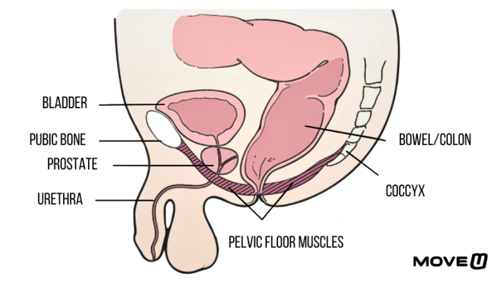
How to perform a pelvic floor contraction
A pelvic floor contraction is performed by drawing up your back passage and testicles. Imagine you are trying to stop wind and at the same time trying to stop your flow of urine. It should be a sensation of ‘tighten and lift’.
You should:
- Continue to breathe normally
- Keep your buttocks and legs relaxed though you may feel a gentle tightening of your tummy
- Always let the muscles fully relax at the end of a contraction
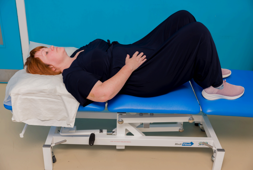
Getting to know how it feels to contract the muscles is an important step in knowing when they are working, as well as when they are relaxed. It is easiest to practise this in a sitting or lying position.
When you understand how to contract and relax them, there are other exercises which can be useful to achieve relaxation.
Lift and let it go in stages
During this exercise, imagine the pelvic floor is a lift in a 3-storey building. Contract the pelvic floor muscles a little to lift to the first floor, pull in a little bit more to go to the second floor, squeeze a little more to go to the top. Continue to gently breathe throughout each hold.
Now slowly allow the muscles to release to go down to the second floor, release a little more to go to the first floor, let the muscle relax further back to the ground floor, and now let them fully release down to the basement.
Allow the pelvic floor muscles to soften, widen and lengthen – there is no need to push or bear down.
Let them soften, lengthen, and melt. This takes practice to achieve, and you may start with less stages and progress.
Management options
There are a variety of treatment options that can be tried. The response varies between individuals, so it is worth trying different things to see which will help you and often it is a combination that seems to be useful.
Abdominal breathing is one of the easiest relaxation techniques to learn. When we become stressed or feel pain, one of our body’s fight or flight reactions is shallow, rapid breathing. Taking deep, slow breaths is one way we can turn off this fight or flight reaction.
Abdominal breathing and enabling your tummy muscles to release, can be a powerful technique to promote softening and lengthening of the pelvic floor system. This reset can be very useful in the management of many pelvic floor symptoms.
Practicing breathing also enables the autonomic system to moderate its activity and be better balanced. This part of the nervous system is responsible for automatic activities in the body, which includes bladder and bowel function.
Deep breathing exercises are known to be effective at removing stress hormones and chemicals rapidly; as well as promoting the release of hormones, such as endorphins which are known to enable the whole body to be more settled.

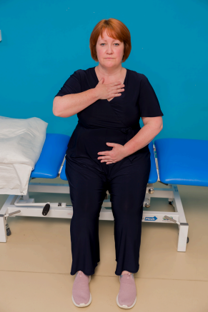
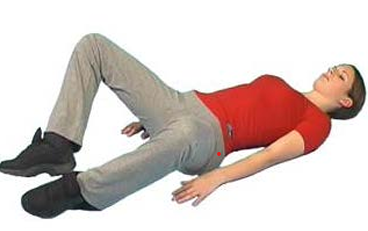
Choose a position which feels most comfortable, either lying with your knees bent or reclined sitting. Spend a moment settling your body, getting comfortable to enable you to focus on your breath. Place one hand at the top of your chest, and the other over your lower tummy.
Notice where you are breathing from. Notice which hand is doing the most movement. How quickly is it rising and falling? And think about how fast you are breathing. Sometimes the top hand moves more than the bottom hand.

See if you can change this, so the bottom hand does more of the movement. Have a soft mouth and jaw, let your shoulders soften, and let the air down to the bottom of the lungs so the ribs expand. This is called a diaphragmatic breath or a deep breath. There should be no forced movement and no active pushing out of the tummy. A gentle breath in.
It sounds simple, but it is not always easy to allow the tummy to soften. It takes practice. The diaphragm should gradually come down gently to enable the tummy to soften. This enables the pelvic floor to release and promotes a reset of the whole system.
Aim to practice for 5 to 10 minutes each day. Using little opportunities throughout the day can be effective as well.
Mindfulness is being aware of your body, in the present. It is about noticing what you think, feel or want during this moment. Mindfulness can help you to see your thoughts as events rather than facts or truths. And it can help you to make kinder choices on how to manage your thoughts, situation or pain.
Relaxation involves using your mind to unwind the tension within the body. This can include breathing skills and focusing the mind on relaxing images, colours or experiences.
There are many different breathing patterns out there for relaxation and mindfulness. Consider box breathing or 7 to 11 breathing.
Box breathing – sitting comfortably, inhale slowly through your nose for 4 seconds, hold your breath for 4 seconds, exhale through your mouth or nose for 4 seconds, hold your breath for 4 seconds. Repeat the cycle for a few minutes.
7 to 11 breathing – sitting comfortably, inhale slowly through the nose into the belly (allow the stomach to expand) for 7 seconds, exhale slowly through the mouth or nose for 11 seconds. Repeat the cycle for 5 or so minutes.
You may want to consider gentle forms of exercise like yoga or tai chi, that may also include a meditative component.
Some people find apps useful for practicing mindfulness and relaxation, consider looking at the Headspace, Calm or Mind websites (and associated apps).
Physiotherapy can play an important role in managing these conditions by addressing the soft tissue sensitivity and pelvic muscle behaviour.
There are a variety of different techniques and exercises that can be suggested to help restore the normal function of the area. Some techniques can be taught to do directly to the tissues and others influence the area indirectly.
None of the techniques or exercises are designed to provoke symptoms and the aim is to work towards self-management and normal function.
Experiencing such personal symptoms can have a profound effect on your emotions and relationships. Physiotherapists understand this and the focus of physiotherapy is about empowering you.
Pelvic floor relaxation exercises
The following exercises can assist with pelvic floor relaxation. Aim to hold each position for 30 to 60 seconds and repeat 2 to 3 times.
To start with, you may benefit from completing these exercises little and often to promote pelvic floor relaxation. Over time you may add these into your normal exercise/stretching/yoga routines.
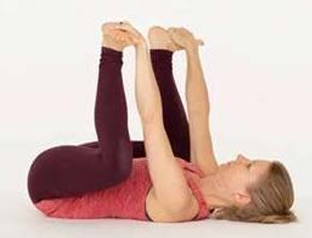
Lie on your back with your knees bent into your chest. As you inhale, take hold of the inside or outside of your feet. Open your knees wider than your trunk and bring them towards the floor next to your armpits. Place your ankles directly over your knees. Flex through your heels, gently pushing your feet into your hands, pulling the hands down to create resistance. Extend your spine by lengthening your tailbone and draw in your belly button slightly. Hold for 30 to 60 seconds.

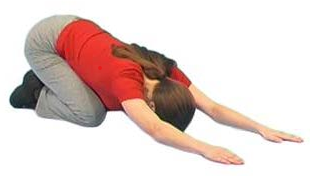
Start on your hands and knees, gently push your bottom back towards your heels. Let your arms slide along the floor as far as possible. Push your bottom back and down and your chest towards the floor. Keep your breathing relaxed throughout.

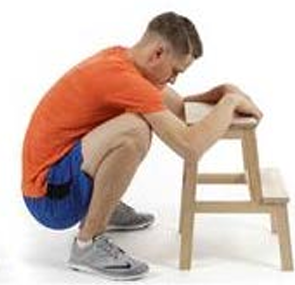
Stand in a hip-width or wider position. Squat down as low as you can.

Lying down with the soles of your feet facing each other, let your knees fall to the side. You can support under the thighs with cushions if the stretch is too strong.

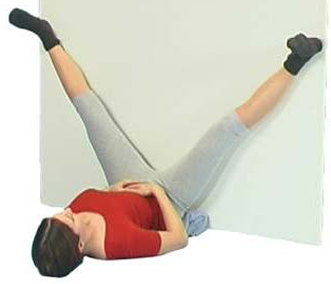
Lie on your back with your bottom as close as possible to the wall, rest your legs in a V shape up the wall.
Need more help?
Consider self referring using the link below:
If you have a new injury or problem, please look at the self help information in our advice pages. We will often complete the same exercises and share information in clinic appointments.
If you still need some more help you can self refer into our service. Please note that the NHS is currently experiencing longer than normal waits, for more information visit our waiting times page.