 Easy read and translate



Osteoarthritis
Do you have osteoarthritis?
Osteoarthritis (OA) is a condition that affects the joints and can cause pain and stiffness. This condition is also known as age-related changes or wear and tear. It is the most common form of joint condition, with the knee most commonly affected.
Typical physical signs are:
- tenderness over the joint
- creaking of the joint
- joint swelling
- restricted movement
- decreased joint stability
- weakness of your thigh muscles
About osteoarthritis
Watch information about osteoarthritis
Spotlight on osteoarthritis
Read these instructions to get the most from our video.
Please pick 1 exercise from each of the bullet points unless stated otherwise by your physiotherapist.
- Hip extension - videos 2 to 4
- Hip abduction - videos 5 to 7
- Hip external rotation - videos 8 to 10
- Knee extension (non-weight bearing) - videos 11 to 13
- Knee extension (weight bearing) - videos 14 to 16
- Balance - videos 17 to 19
- Joint movement and stretching - videos 20 to 24
Please select the arrow on the video to see the full playlist.
Educational videos
Further education and advice
How is osteoarthritis diagnosed?
Read information about how osteoarthritis is diagnosed
- Clinical diagnosis is made based on signs and symptoms.
- An x-ray may show the degree of osteoarthritis.
- Blood tests may rule out other forms of Arthritis.
Top 5 tips for managing knee or hip osteoarthritis
1. Try to keep to a healthy weight, it will help to reduce pain and strain on your joints.
2. Wear sensible, well-fitting shoes (e.g. trainers) to cushion the impact of walking.
3. Keep active but pace yourself – don’t overdo it on ‘good’ days and keep moving on ‘bad’ days by altering your activities.
4. Apply a heat or ice pack to ease pain and stiffness. Ensure you protect your skin to avoid burns or irritation. Do not use ice if you have poor sensation over the area, an infected wound, Raynauds Syndrome, or Cryoglobulinaemia.
5. Don’t stay in the same position for long periods of time (e.g. sitting, lying). If you are struggling to walk and need assistance, walking aids can be provided by the NHS. If you wish to purchase your own, please seek assistance in measuring to ensure the right fit.
How much exercise should I do?
This is a guide to measure how hard you feel your body is working during physical activity. You do not need to do a certain number of exercises, but rather stop when you get above level 7 or cannot do anymore.
- Aim to achieve within the middle range (5 to 7 out of 10).
- The exercises are generally in order of difficulty.
- Repeat the exercise until you feel you have achieved this level of intensity.
- If you feel you are working beyond this, it may be that the exercise is too difficult so you should return to the previous exercise.
- If you do not reach this, it may be that the exercise is too easy, so you may wish to progress onto the next exercise.
- The lying exercises can be done on the floor or on a bed - you can use a pillow.
- The standing exercises should be done with support available, should you need it.
1 - Inactive/very light
Little or no effort at all, anything other than sleeping or complete rest.
2-3 - Light
Slow walking or jogging at your own very comfortable pace. Could maintain or keep going for hours, breathing easily and can carry a conversation.
4 - Slightly more effort
Breathing heavier and heart rate a little faster, feeling warmer. Can hold a strong conversation.
5 - Medium/slightly hard
Still reasonably comfortable. You don't want to stop yet, but if you went much harder you'd be uncomfortable.
6 - Moderate/hard
Breathing hard, sweating and finding it hard to talk.
7 - Hard/vigorous
On the verge of becoming uncomfortable. Short of breath, but can speak a sentence.
8 - Very hard
You can still go on, but you really have to push yourself. Breathing very hard, can only say a few words.
9 - Extremely hard
Cannot sustain the effort for very long. Can barely breathe and speak a single word.
10 - Hardest/max effort
Feeling almost impossible to keep going. Completely out of breath, unable to talk. Your limit.
Exercises
Simple exercises for knee and hip osteoarthritis
- See sections A to E for exercises to strengthen muscles around the hip and knee
- See section F for exercises to improve balance and mobility
- See section G for exercises to improve joint range of movement and stretches.
It is advised that you pick 1 exercise from each section, unless stated otherwise by your physiotherapist.
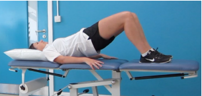 Lie on your back with your knees bent as far as comfortable.
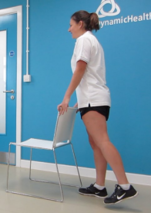 Stand with something to lean against.
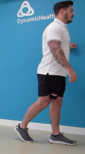 Ensure you do this in a safe environment, so that you have something to hold onto, should you lose your balance.
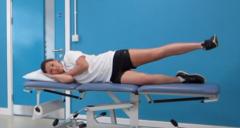 Lie on your side with the underneath leg bent and the upper leg straight.
 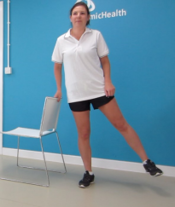 Stand up straight with something to lean against.
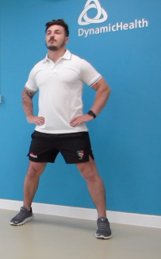 Ensure that you do this in a safe environment, so that you have something to hgold onto, should you lose your balance.
 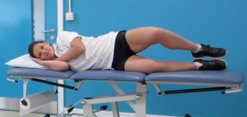 Lie on your side with your knees bent and feet together.
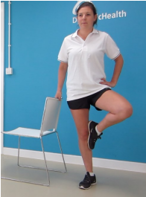 Stand with something to lean against. Transfer your weight onto one leg and tense your tummy muscles. Rest your foot against the inner side of the opposite knee.
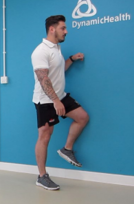 Stand sideways against a wall. Slide 1 hip and knee along the wall up to a right angle.
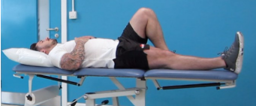 Lie on your back with one knee bent and the other leg straight.
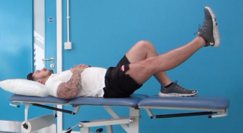 Lie on your back with 1 leg straight and the other knee bent.
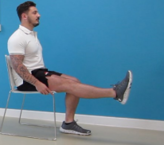 Sit on a chair.
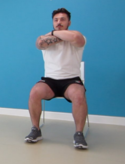 Sit on the edge of a chair. Place your feet hip-width apart with toes pointing forwards.
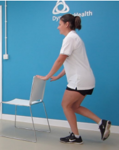 Stand with something to lean against.
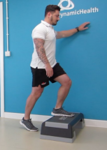 Stand facing a step. Step up several times with one leg leading and then the other.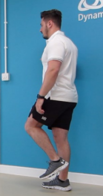
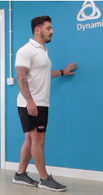 Practice walking heel-to-toe, as if you are on a balance beam or tightrope.
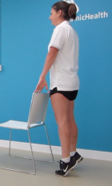 Push up on your toes. Hold for several seconds before slowly returning to the starting position.
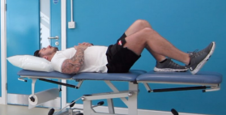 Lie on your back.
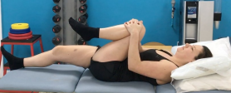 Lie on your back with your knees bent.
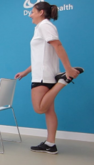 Stand with something to lean against.
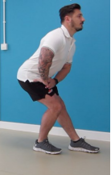 Stand with 1 leg out in front and the other knee
 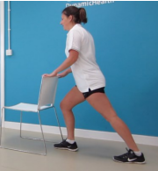 Stand with something to lean against.
What other help is available?
Steroid injections
- Steroid injections are mainly used for very painful osteoarthritis.
- They are not clinically suitable for everyone but can help some patients significantly. The injection is given directly into your joint.
- It can start to work within a day or so and may improve pain for several weeks or even months.
- If successful the injection will provide short term relief but is not a fix.
- Reducing pain through exercises that stretch and strengthen joints, muscles, and other soft tissues will provide longer term relief.
Joint replacement
- This may be considered as a suitable treatment option if you have or develop uncontrolled, intense, persistent pain resulting in substantial impact on your life.
- This means pain of almost continuous nature (e.g. pain when standing or walking on level surfaces for less than half an hour and requiring the use of walking aids).
- You may find you are having to continuously use anti-inflammatory pain-relief medication to control symptoms.
- There would be significant limitation of daily activities (e.g. you may be only being able to complete a few or none of your normal activities and self-care). However, it is important that you have had symptoms for at least 6 months and trialled conservative management (e.g. exercises, pain relief) for at least 3 months, as flare-ups of pain in osteoarthritic joints can settle within this timeframe.
How can I improve my aerobic fitness?
In short anything that raises your heart rate. 2 main ways are:

Through activity
For example - swimming, walking, cycling, fitness classes etc.
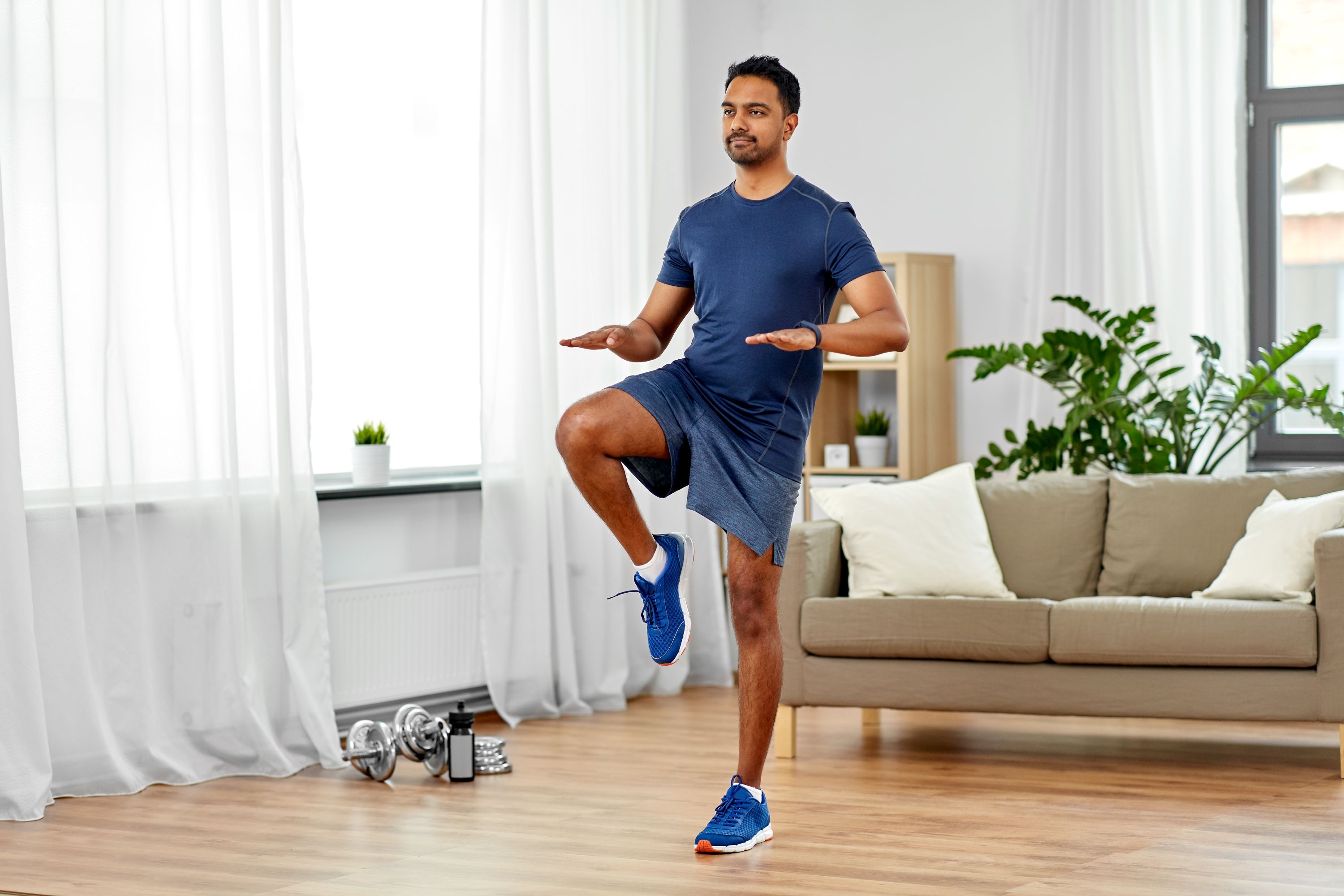
Adding a warm up
By adding a warm-up to your strengthening exercises, for example, marching the spot.
Need more help?
Consider self referring using the link below:
If you have a new injury or problem, please look at the self help information in our advice pages. We will often complete the same exercises and share information in clinic appointments.
If you still need some more help you can self refer into our service. Please note that the NHS is currently experiencing longer than normal waits, for more information visit our waiting times page.

Need more information?
- Versus Arthritis - Osteoarthritis (OA ) of the spine
- Versus Arthritis - Osteoarthritis (OA ) of the elbow and shoulder
- Versus Arthritis - Ostearthritis (OA) of the hand and wrist
- Versus Arthritis - Hip Osteoarthritis Low level exercises
- Versus Arthritis - Hip Osteoarthritis High level exercises