 Easy read and translate



Knee pain
Understanding knee pain
Knee pain is a common complaint among adults. It can have many different causes and present in a number of ways.
The good news is most knee pain responds very well to exercises, which strengthen and stretch the joint. By strengthening these muscles you will not only lessen the pain but also protect the knee from further injury.
It is important to see your GP if:
your knee pain came on following trauma
you are unable to weight bear through your affected leg
your knee is hot, red and swollen as this may be a sign of infection
your knee is swollen and stiff
About the knee
The knee is one of the largest joints in the body and what is called a hinge joint, which joins the thigh bone (femur) to the shin bones (tibia and fibula) and the kneecap (patella).
The ends of the bones are covered with a layer of cartilage that absorbs shock and allows the bones to glide easily against one another as they move. Between the tibia and femur bone are two crescent-shaped pads of cartilage that reduce friction and disperse the weight of the body across the joint called the meniscus. The bones are held together by a joint capsule, four key ligaments and two key groups of muscles; your quadriceps and hamstrings.

About knee pain
Watch the video for information about knee pain
Spotlight on knee pain
Our playlist of videos demonstrates the exercises that will help you manage your knee pain. The playlist contains nine exercises.
Please watch the introductory animation at the beginning of the playlist before you start.
Select the arrow to see the full playlist.
- Aim for 5 to 8 repetitions of each exercise initially.
- However, you may need to start with fewer as comfort allows and gradually build up as able.
Causes of knee pain
Knee pain is relatively common and not commonly related to anything serious.
There are a number of reasons you may be experiencing knee pain; it may have appeared suddenly following a twist or a fall, with damage to cartilage and joints, such as meniscal, or patellofemoral knee pain. Initially, knee pain can feel quite severe but can typically start to settle within a few days to a week or two.
Pain can also develop gradually over time as the body changes with age. The knee is one of the joints most commonly affected by osteoarthritis and the most common reason for knee pain if you are over the age of 50.
Physical signs of osteoarthritis of the knee include:
- tenderness over the joint
- stiffness in the morning, but not usually lasting more than 30 minutes
- creaking of the joint
- joint swelling
- restricted movement
- decreased joint stability
- weakness of thigh muscles
Whatever the cause, exercise and following our simple tips can help reduce the symptoms.
How much exercise should I do?
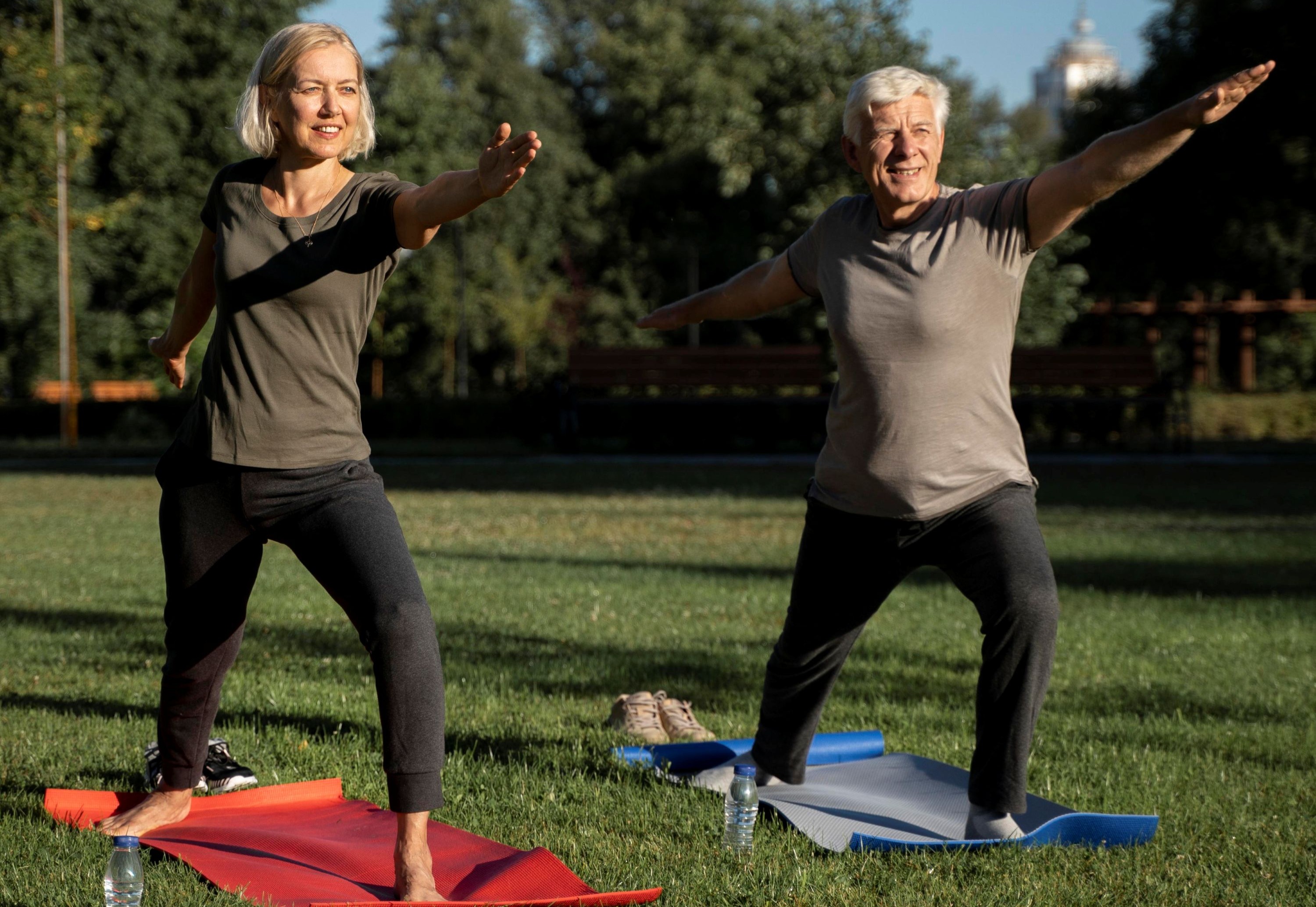
Exercise every other day
Allowing enough rest is important to let soft tissues recover and develop.
Choose 3 or 4 exercises
Choose exercises that are challenging but manageable.
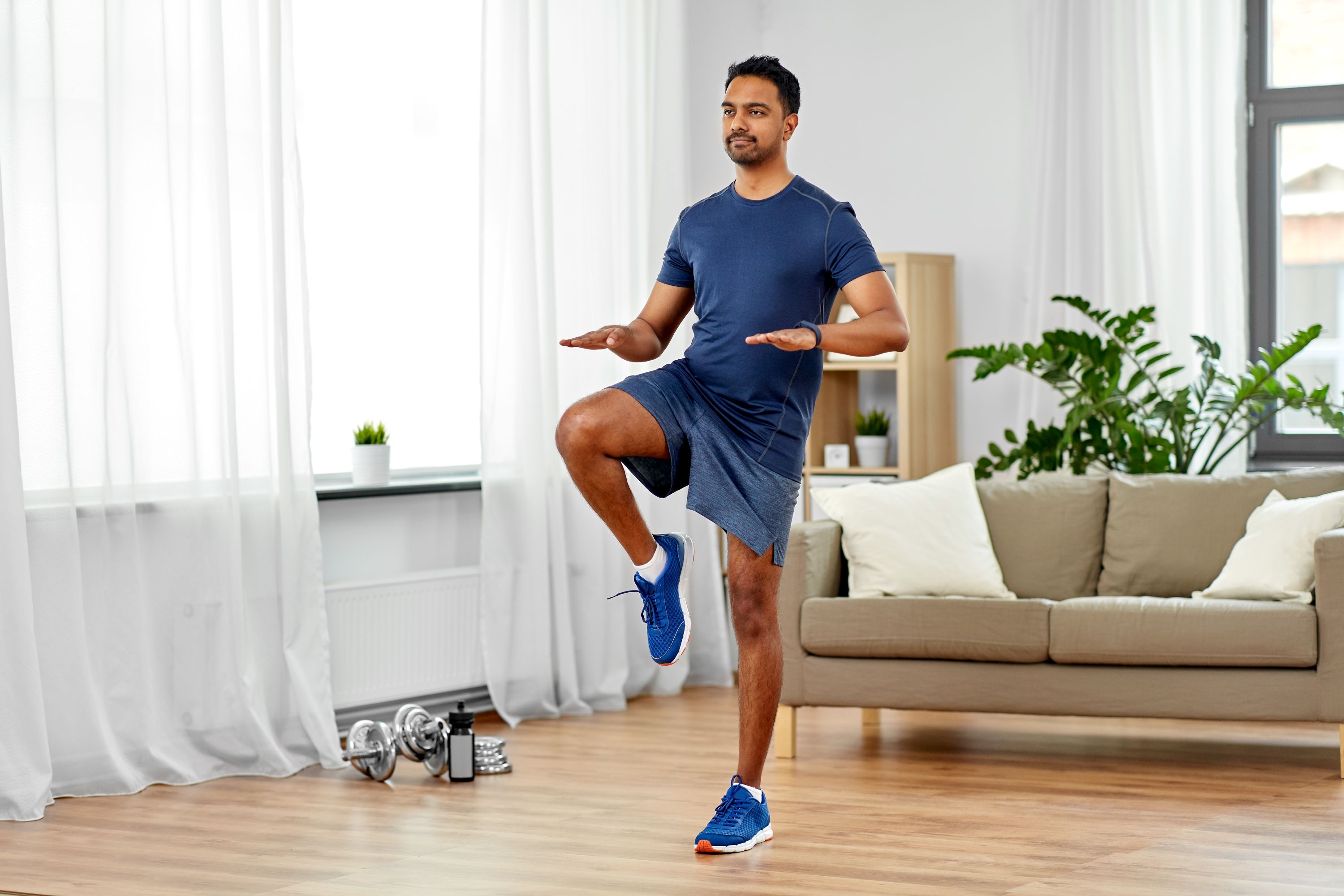
Repeat the exercise
Perform 3 to 5 sets of 5 repetitions for each exercise.

Rest
Rest for up to 1 to 2 minutes between each set.

Once an exercise is easy, progress it
Increase the number of repetitions (aim for 10), hold the positions for longer or move to a more challenging exercise.
How much pain is too much pain?
Before exercising
Before exercising, rate your pain at the moment on a scale of 0-10, where 0 is no pain and 10 is the worst pain you can imagine.
A maximum pain level
A maximum pain level of 4/10 whilst exercising is fine as long as it eases within 45 minutes of the session and does not interfere with sleep or activities the next day.
If your pain increases
If your pain increases beyond this, simplify the exercise by reducing the range of movement or number of repetitions, or try an easier exercise.

Beginner exercises
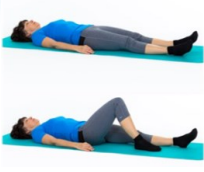 Lie on your back with your legs straight, wherever you are most comfortable. Slowly bend your knee by sliding your heel towards your buttocks and return to the starting position.
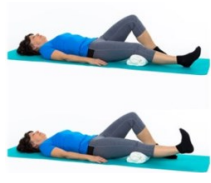 Lie on your back with one leg straight and the other leg straight, wherever you are most comfortable.
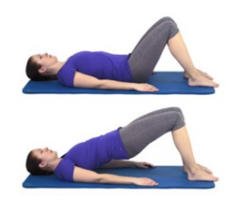 Lie on your back, wherever you are most comfortable, whether it be on your bed or on the floor. Bend your knees up, and place them hip width apart and your feet flat.
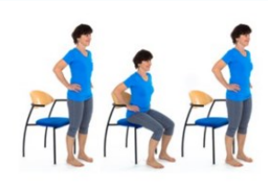 Choose a good, steady chair, such as a dining room chair for this exercise. Sit on the chair with your feet and knees hip-width apart and feet flat on the floor. Aim to keep your knees and feet pointing forward.
 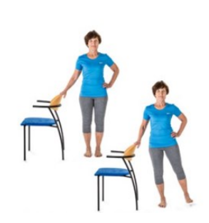 Stand up tall with your back against a wall and hold onto a support as you need to. Lift your leg sideways, keeping your leg against the wall and leading the movement with your heel.
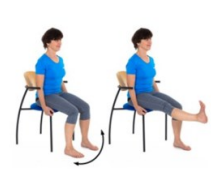 Sit up straight on a sturdy chair, with your feet flat on the floor. Bring your toes up towards your shin and straighten your knee, using the muscles at the front of your thigh in a controlled manner and then return to the starting position.
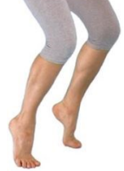 Stand with your feet flat and hip-width apart. Hold on to something for balance. Bend your knees to approximately. 45 degrees.
 Advanced exercises
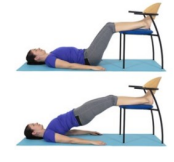 Lie on your back, with your lower legs resting on a sturdy chair. Suck in your belly button and clench your buttocks.
 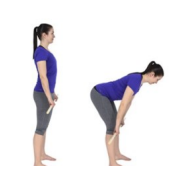 Stand tall with your feet hip-width apart. Hold a stick close to the top of your thighs and hands positioned just wider than shoulder width apart. With almost straight knees, tilt your upper body forward and push your hips gently backwards until you feel a stretch in the back of your thighs.
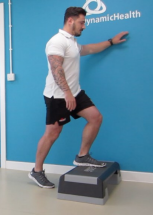 On your bottom step, place one foot flat on the step. Hold on for balance as required. Push up onto the step with this leg, straightening your knee and hips. As you push up, raise the opposite knee/thigh up to hip height if you can. Then, in a controlled manner, step back down to the floor and repeat on the opposite leg.
Knee osteoarthritis exercises
If you’re just beginning, start with one set of 3 to 4 repetitions and work up to 8 to 10 as you get stronger. As the exercises get easier, add sets until you’re up to three sets during one exercise session.
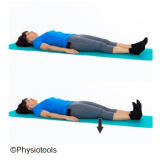 This exercise is called the isometric knee extension in supine with both legs.
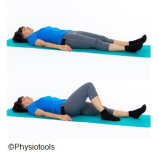 This exercise is called the active knee flexion in supine.
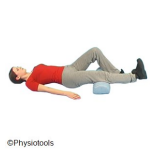 Lying on your back. Bend one leg and put your foot on the bed, and put a cushion under the other knee.
 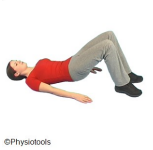 Lying on your back with knees bent. Squeeze your buttocks together and lift your bottom off the floor. Return to starting position.
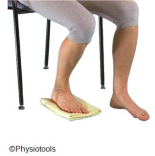 Sit on a chair with a towel under one foot. Slide the foot under the chair as far as you can.
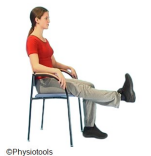 Sit on a chair. Pull your toes up, tighten your thigh muscle and straighten your knee. Hold and slowly relax your leg.
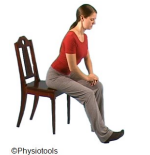 Sit on a chair. Place one leg in front of the other with your knee slightly bent. Lean forward, keeping your back straight.
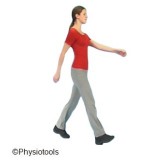 Stand.
Top Tips
Read our top tips for improving knee pain.
- Try and build your exercises into your everyday activities.
- You don’t have to do all the exercises in one go.
- Don’t feel you have to replicate the full movement of the exercise straight away.
- Use it as an initial guide.
- If one particular movement is painful, use this each week to evaluate your progress.
- It is normal for it to take 6 to 12 weeks before you see a good improvement in your pain, movement and strength.
- Don’t stop moving your knee – muscles need movement to keep them healthy.
- If your sleep is poor, try supporting your knee on a pillow.
- General exercise can really help your recovery so try to keep going with other activities you enjoy to keep fit.
- Wear sensible, well-fitted shoes e.g. trainers.
- When resting, sit with your leg supported and ankle higher than your hip (especially if swollen).
- Try using an ice pack on your knee for 10 to 15 minutes (wrap in a damp towel to avoid ice burn). Do not use ice on your knee if you have poor sensation over the area, an infected wound, Raynaud's syndrome or cryoglobulinemia.
Read our top tips for supporting osteoarthritis of the knee.
- Keep active but pace yourself – don’t overdo it on ‘good’ days and keep moving on ‘bad’ days - alter your activities depending on your pain levels.
- Try to maintain a healthy weight, as it reduces excessive load on the knee and improves function.
- Wear shoes with thick, shock-absorbing soles to cushion the impact of walking.
- Ensure you take regular painkillers as advised by your GP to help with effective pain relief and to aid in increased function.
- Apply a heat or ice pack to ease pain and stiffness. Ensure you protect your skin to avoid burns or irritation. Do not use ice if you have poor sensation over the area, an infected wound, Raynauds Syndrome, or Cryoglobulinaemia. A TENS machine can also be used for pain relief and reduction of stiffness.
- Don’t stay in the same position for long periods of time (e.g. sitting, lying). When you are awake, move your knee gently for 10 to 20 seconds every hour. If you are struggling to walk and need assistance, walking aids can be provided by the NHS. If you wish to purchase your own, please seek assistance in measuring to ensure the right fit.
Need more help?
Consider self referring using the link below:
If you have a new injury or problem, please look at the self help information in our advice pages. We will often complete the same exercises and share information in clinic appointments.
If you still need some more help you can self refer into our service. Please note that the NHS is currently experiencing longer than normal waits, for more information visit our waiting times page.
