 Easy read and translate



Foot or ankle pain
Do you have foot or ankle pain?
This could be caused by an injury, like a sprain, by wearing inappropriate/ill-fitting shoes or by a medical condition, such as age-related joint changes (osteoarthritis), plantar fasciitis, or tendonitis.
Because we use our feet and ankles every day to get around, when they are painful, it can be quite unbearable.
It is important to see your GP if:
- your ankle pain came on following a fall or trauma
- you are unable to put weight on your foot or ankle, making it difficult to walk
- your ankle is hot, red and swollen as which may be a sign of infection
- you have swollen or stiff feet
- you experience burning pain or numbness
- you are diabetic
The good news is that you can ease most foot or ankle pain with simple things yourself. We have shared some of our top tips for alleviating the pain and exercises to strengthen and stretch the joint.
For health professionals: Please note referrals for hammer toes, hallux valgus, hallux regidus, plantar faciitis or mortons neuroma need to be send to CPFT community podiatry service.
About foot or ankle pain
Watch the video for information about foot or ankle pain
Spotlight on foot and ankle pain
Our playlist of videos demonstrates the exercises that will help you manage your foot/ankle pain. Please watch the introductory animation at the beginning of the playlist before you start. Select the arrow in the video box to view all videos in this playlist.
During the first 48 to 72 hours after an injury, please only complete joint range of movement exercises, videos 2 to 4. After this time you can complete any of the exercises in this booklet as long as they do not cause you much pain.
- Aim for 5 to 8 repetitions of each exercise initially.
- However, you may need to start with fewer as comfort allows and gradually build up as you are able.
How to help ankle pain
This guidance has been produced by the DynamicHealth physiotherapy service. It offers simple measures to help you manage your ankle problem safely; often the right advice and exercises are all you need to improve the problem. This information has been made available to your GP, who may ask you to try the advice and exercises prior to consulting a physiotherapist.
If your ankle pain started after recent trauma, please seek medical advice before reading further.
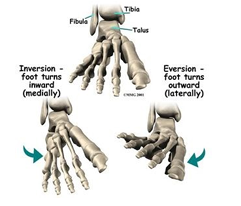
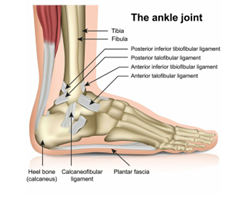 ankle joint is primarily formed by three bones the tibia and fibula of the leg and talus from the foot. This is described as a synovial hinge joint which allows you to point your foot, as well as bringing the foot and toes up towards the shin (otherwise describe as plantarflexion and dorsiflexion). Other key movements are turning your foot in and outwards (otherwise known as inversion and eversion).
  ankle joint is bound together by strong tibiofibular ligaments (the deltoid ligament, anterior and posterior talofibular ligaments and the calcaneofibular ligament), which help to stabilise the joint. The ankle is further supported by muscles that pass over and around the joint.
 How much exercise should I do?
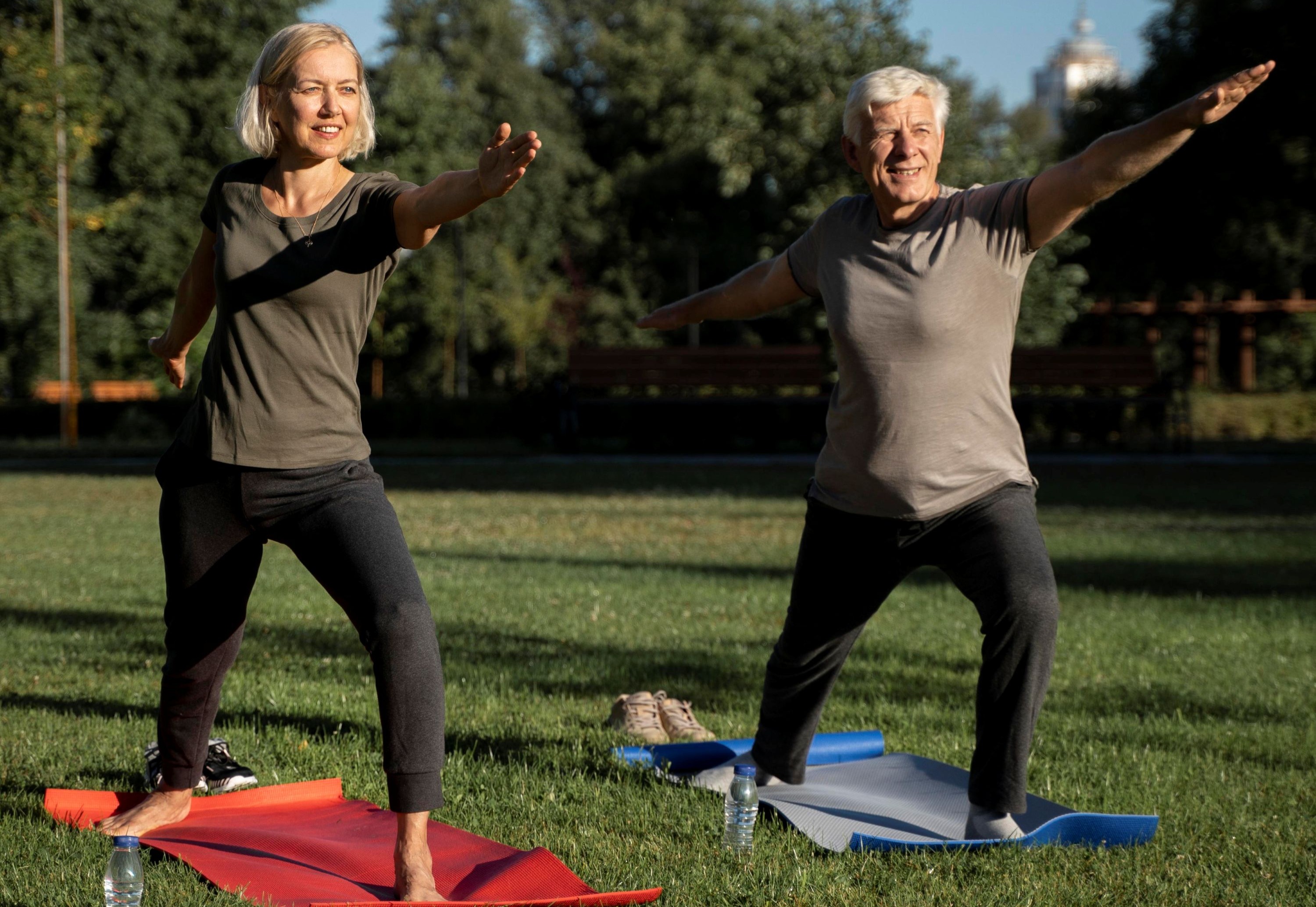
Exercise 2 - 3 times a week
Allowing rest days in between to let soft tissues recover and develop.

Choose 3 or 4 exercises
Choose exercises that are challenging but manageable.
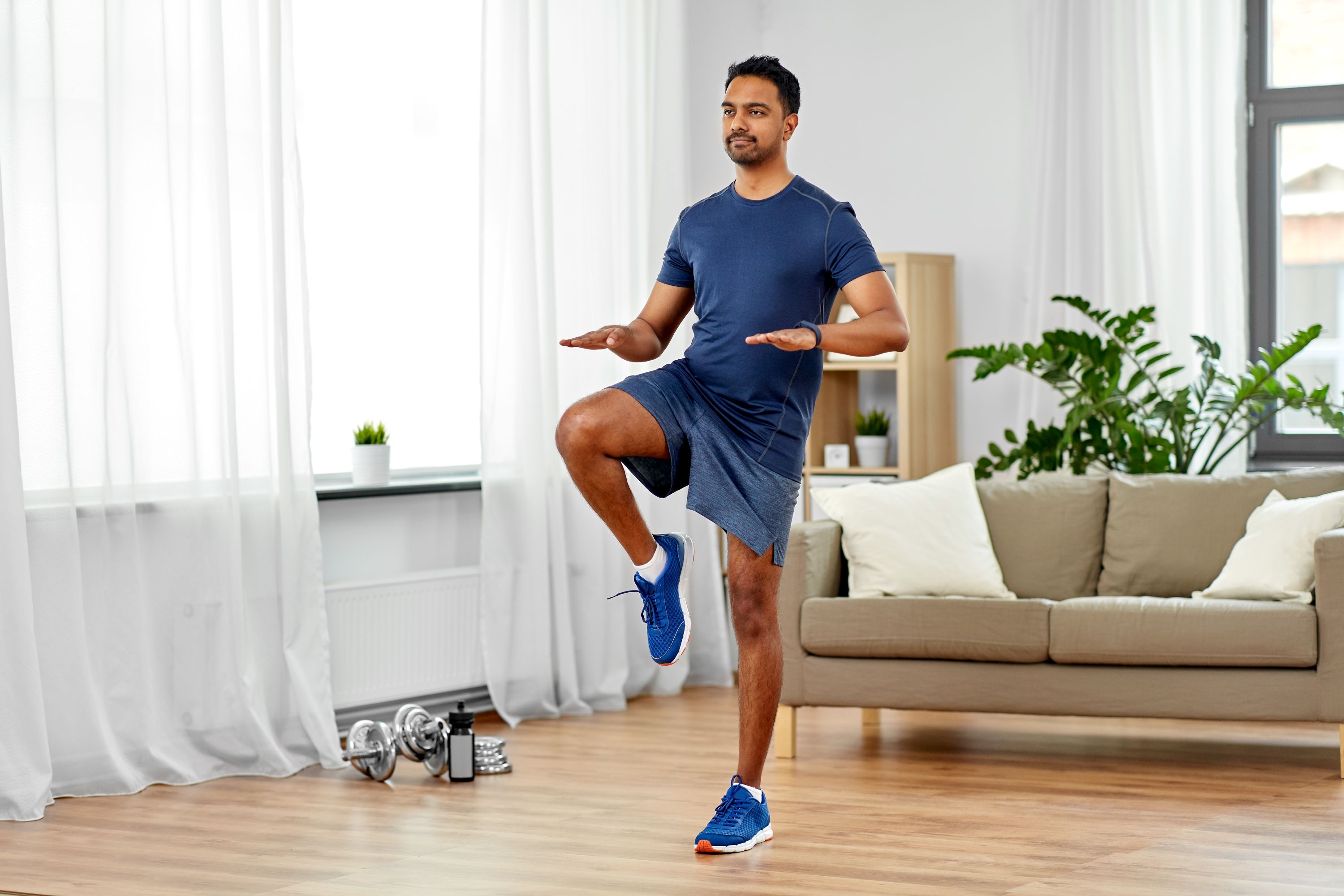
Repeat the exercise
Perform 3 to 5 sets of 5 repetitions for each exercise.

Rest
Rest for up to 1 to 2 minutes between each set and monitor how you are feeling during and after exercising.

Once an exercise is easy, progress it
If the exercises are feeling easy after a week at this level, try a small increase in difficulty. You can do this by increasing the resistance (tension in band or weight used), depth of the movement, slowing down the return phase of the movement or adding a hold for a few seconds at the end of the movement.
How much pain is too much pain?
Before exercising
Before exercising, rate your pain at the moment on a scale of 0-10, where 0 is no pain and 10 is the worst pain you can imagine.
A maximum pain level
A maximum pain level of 4/10 whilst exercising is fine as long as it eases within 45 minutes of the session and does not interfere with sleep or activities the next day.
If your pain increases
If your pain increases beyond this, simplify the exercise by reducing the range of movement or number of repetitions, or try an easier exercise.

Beginner exercises
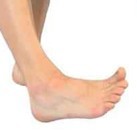 itting or lying.
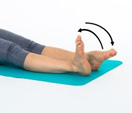 on your back with your legs straight.
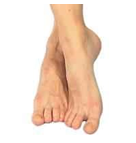 on a chair or on the floor. Cross your feet and put the outer edges of your little toes together.
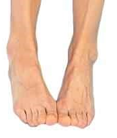 on a chair or on the floor. Put the inner borders of your big toes together.
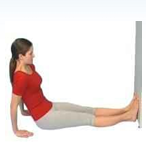 with your legs stretched out in front of you, with your arms supporting you. Feet resting against a wall.
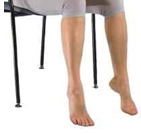 on a chair.
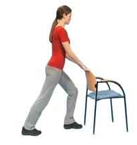 with the leg to be stretched straight behind you and the other leg bent in front of you. Take support from a wall or chair.
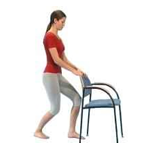 in a walking position with the leg to be stretched behind you. Hold on to a support.
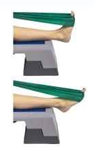 with your leg straight and the loop of an exercise band around your foot. Hold both ends and take the slack off the band.
 an exercise band firmly to the side. Take the loop of the band around your forefoot.
 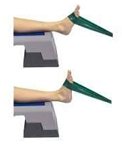 with your leg straight and the loop of an exercise band around your foot. Attach a band firmly in front of you with the slack taken off.
Advanced exercises

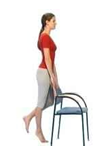 on one leg.
 by standing on one leg.
 on one leg on a balance pad.
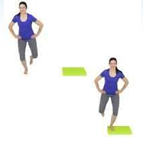 tall next to a balance pad. Make sure that the pad doesn't slide.
Top tips
Read some top tips to help relieve foot or ankle pain
- Try and build your exercises into your everyday activities.
- You don’t have to do all the exercises in one go.
- Don’t feel you have to replicate the full movement of the exercise straight away. Use it as an initial guide.
- If one particular movement is painful, use this each week to evaluate your progress.
- It is normal for it to take 6 to 12 weeks before you see a good improvement in your pain, movement and strength.
- Don’t stop moving your ankle - muscles need movement to keep them healthy.
- If your sleep is poor, try supporting your ankle on a pillow.
- General exercise can really help your recovery so try to keep going with other activities you enjoy to keep fit.
- Wear sensible, well-fitted shoes e.g. trainers.
- When resting, sit with your leg supported and ankle higher than your hip (especially if swollen).
- Try using an ice pack on your ankle for 10 to 15 mins (wrap in a damp towel to avoid ice burn). Do not use ice on your ankle if you have poor sensation over the area, an infected wound, Raynaud's syndrome or cryoglobulinemia.
Need more help?
Consider self referring using the link below:
If you have a new injury or problem, please look at the self help information in our advice pages. We will often complete the same exercises and share information in clinic appointments.
If you still need some more help you can self refer into our service. Please note that the NHS is currently experiencing longer than normal waits, for more information visit our waiting times page.
